
Project Description
Assignment Task
As a medical professional, we will often be tasked with presenting a diagnosis to a patient with no educational background or experience within the healthcare profession. In these cases, it is critical to convey this very important and pertinent information to the patient in a way in which they can fully understand the information, i.e., to put the information into laymen terms, as well as making certain the patient is comfortable in seeking additional support and community.
In addition, patients in the above scenario might also choose to seek out the help of a healthcare advocate (a medical professional appropriately trained within the medical field) to help the patient research, organize, understand and communicate and field questions with the physician. Patient healthcare advocates require that the information is conveyed and presented to them as if the physician and/or healthcare professional were speaking to a colleague, i.e., medical and technical terms.
Assume the role of a healthcare professional tasked with educating both the newly diagnosed patient (in laymen terms), as well as the patient’s healthcare advocate (medical and technical terms).

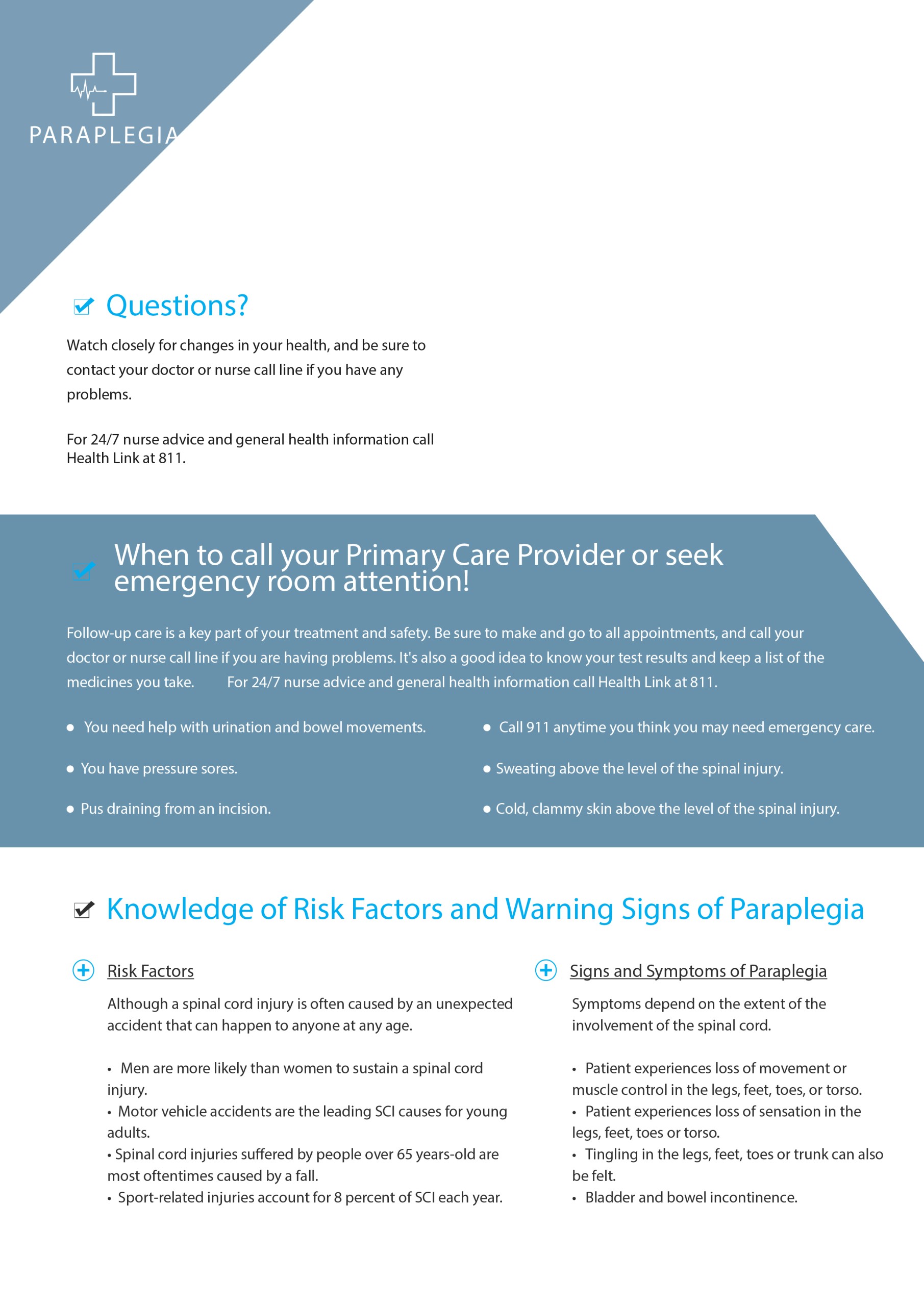
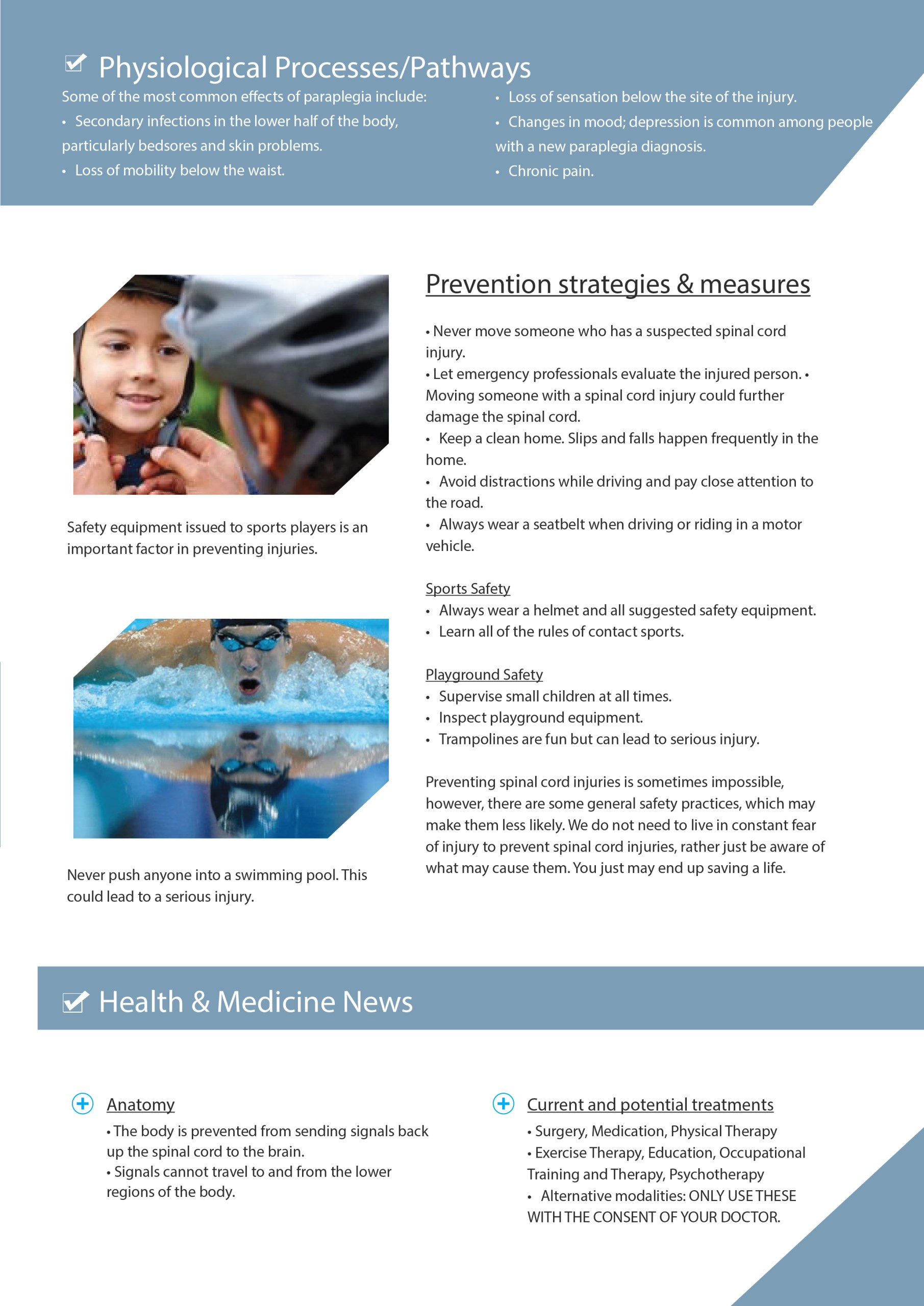
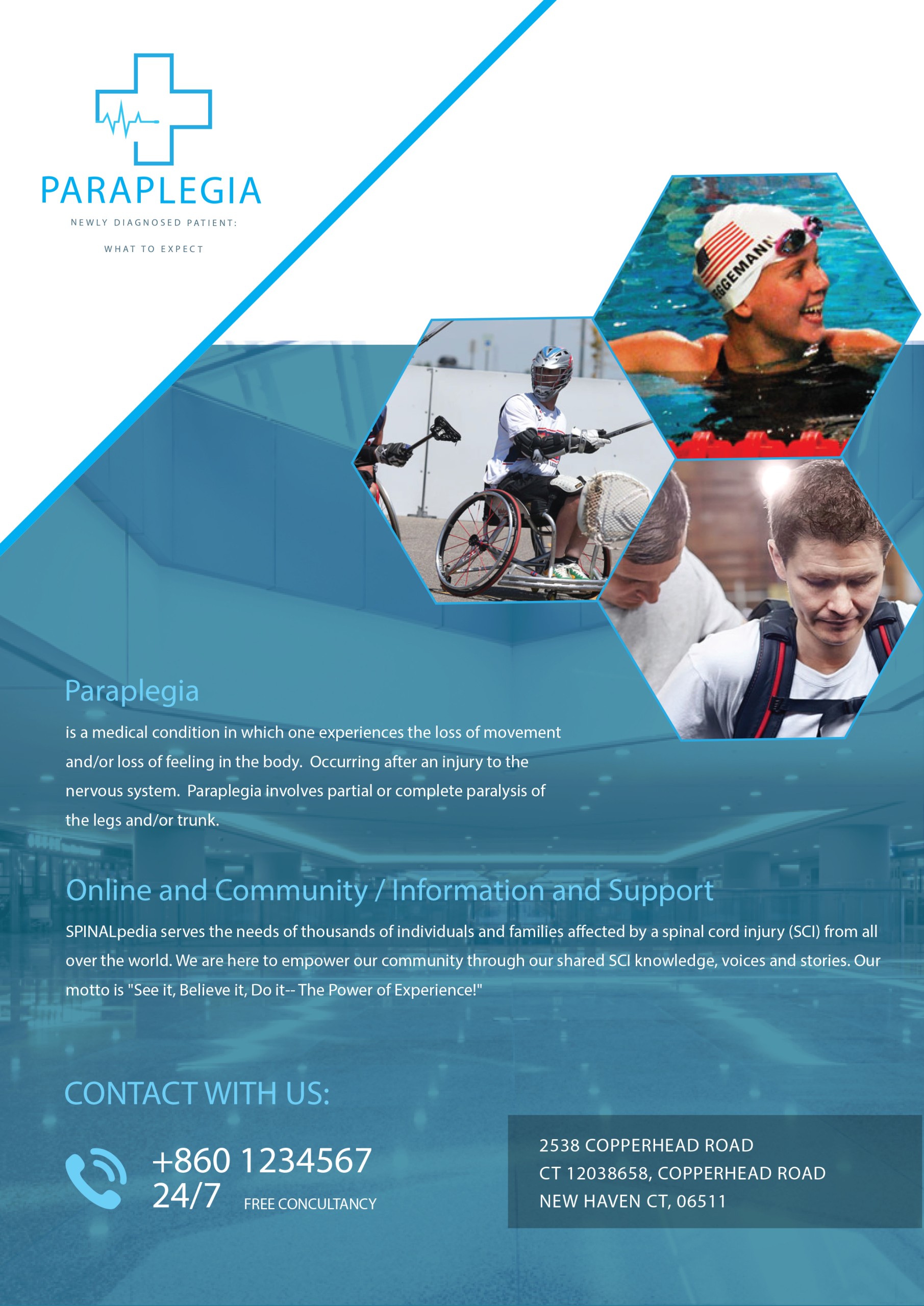
Project Goal
A Guide for Patients and Advocates
Being diagnosed with a medical condition, especially one that significantly impacts mobility like paraplegia, can be overwhelming. As healthcare professionals, we understand the importance of clear communication – tailored to the individual’s needs. This article aims to provide a comprehensive understanding of paraplegia, explaining it in both layman’s terms for the patient and with medical terminology for the patient’s healthcare advocate.
Understanding Paraplegia in Simple Terms
Imagine your body is like a complex machine, with the brain as the control center and the spinal cord like a highway that carries messages back and forth. Paraplegia occurs when this “highway” in your lower back or chest area is damaged or has a problem. This damage interrupts the communication between your brain and the lower part of your body.
Specifically, this means you may experience paralysis, or loss of movement, in your legs and sometimes your lower torso. It’s like a wire has been cut, and the signals can’t get through. How this affects you personally can vary greatly depending on where the damage occurs and how severe it is.
What Causes Paraplegia?
There are many reasons paraplegia might occur. Some common causes include:
- Spinal Cord Injuries: These are often caused by accidents like car crashes, falls, or sport injuries.
- Spinal Cord Diseases: Some conditions can gradually damage the spinal cord, such as certain types of tumors or infections.
- Birth Defects: In some cases, a problem with the development of the spinal cord during pregnancy can lead to paraplegia.
What to Expect
Living with paraplegia means learning new ways to manage daily activities. It often requires the use of wheelchairs or other mobility aids. It might also involve adjustments to your home and work environment. There are many resources available to help you with this transition, including physical therapy, occupational therapy, and specialized support groups.
It’s also important to be aware that paraplegia can sometimes affect other functions, such as bladder and bowel control, and sexual function. The medical team will work closely with you to address these issues and find ways to manage them.
It’s Okay to Ask for Help
This is a lot to take in, and it’s perfectly normal to feel overwhelmed. Please know that you’re not alone. Don’t hesitate to ask questions and express your concerns. Your medical team is here to support you. If you wish to have an additional professional by your side, a healthcare advocate can be a great resource. They can help you navigate the medical system, do research, and make sure your needs are being met.
For the Healthcare Advocate: A Technical Perspective of Paraplegia
As a healthcare professional, you understand the importance of precise medical terminology. Let’s delve into a more technical explanation of paraplegia.
Paraplegia is defined as the impairment of motor or sensory function in the lower extremities (i.e. the legs) and sometimes the lower trunk, resulting from damage to the spinal cord or its roots and is not a disease in and of itself. The lesion can occur anywhere below the cervical level of the spinal cord. Understanding the underlying Anatomy and Physiology I of the nervous system is critical here.
Pathophysiology
The primary pathophysiology involves disruption of the ascending and descending tracts of the spinal cord. Specifically:
- Corticospinal Tract: Damage to this tract, responsible for voluntary motor control, leads to motor deficits manifested as paralysis and spasticity.
- Spinothalamic Tract: Disruption in this tract, which carries sensory information like pain and temperature, can result in deficits below the level of the lesion.
- Dorsal Columns (Medial Lemniscal Pathway): Damage here affects proprioception, vibration, and fine touch.
The level and severity of the lesion determine the extent of the functional deficit. Lesions at the thoracic and lumbar levels typically result in paraplegia, while cervical lesions can cause quadriplegia (tetraplegia). The Anatomy and Physiology I of the specific spinal levels affects which muscles are innervated, thus impacting the presentation of the deficit.
Etiology
The etiology of paraplegia can be categorized into:
- Traumatic: Spinal cord injury (SCI) from blunt or penetrating trauma.
- Non-traumatic: This includes various myelopathies such as spinal cord tumors, infections (myelitis), vascular events (spinal cord infarction, arteriovenous malformations), autoimmune/inflammatory disorders (multiple sclerosis, transverse myelitis), and congenital conditions (spina bifida).
Management
Acute management involves stabilization of the spinal column to prevent further injury. Long-term management focuses on:
- Rehabilitation: Including physical therapy, occupational therapy, and adaptive equipment training.
- Medical Management: For associated complications, including bowel and bladder dysfunction, skin breakdown (pressure ulcers), neuropathic pain, and spasticity.
- Psychosocial Support: The patient and their family need significant support along their rehabilitation process.
The Importance of Patient Advocacy
As a healthcare advocate, your knowledge of Anatomy and Physiology I and medical terminology allows you to:
- Facilitate clear communication between the patient and medical staff.
- Ensure the patient understands their diagnosis and treatment options.
- Help the patient access necessary resources and support networks.
- Monitor treatment plans and communicate any changes or concerns with the medical team.
Conclusion
Paraplegia presents a unique challenge, both physiologically and emotionally for the patient. By providing information in a way that is appropriate for each individual, we can empower patients and advocates to navigate this journey with clarity and confidence, leveraging medical knowledge and empathetic communication.
